Your AI Girlfriend Will Never Disagree With You
Earlier in July, Elon Musk’s Grok AI recently rolled out a “girlfriend mode”—an anime-style, voice‑interactive companion named Ani. She flirts with you, remembers your favorite comfort food, and congratulates you when you’ve had a good day. She’ll agree with your theories, laugh at your jokes, and tell your enemies they’re wrong—she’ll never ask you to drink less, work harder, or be more patient.
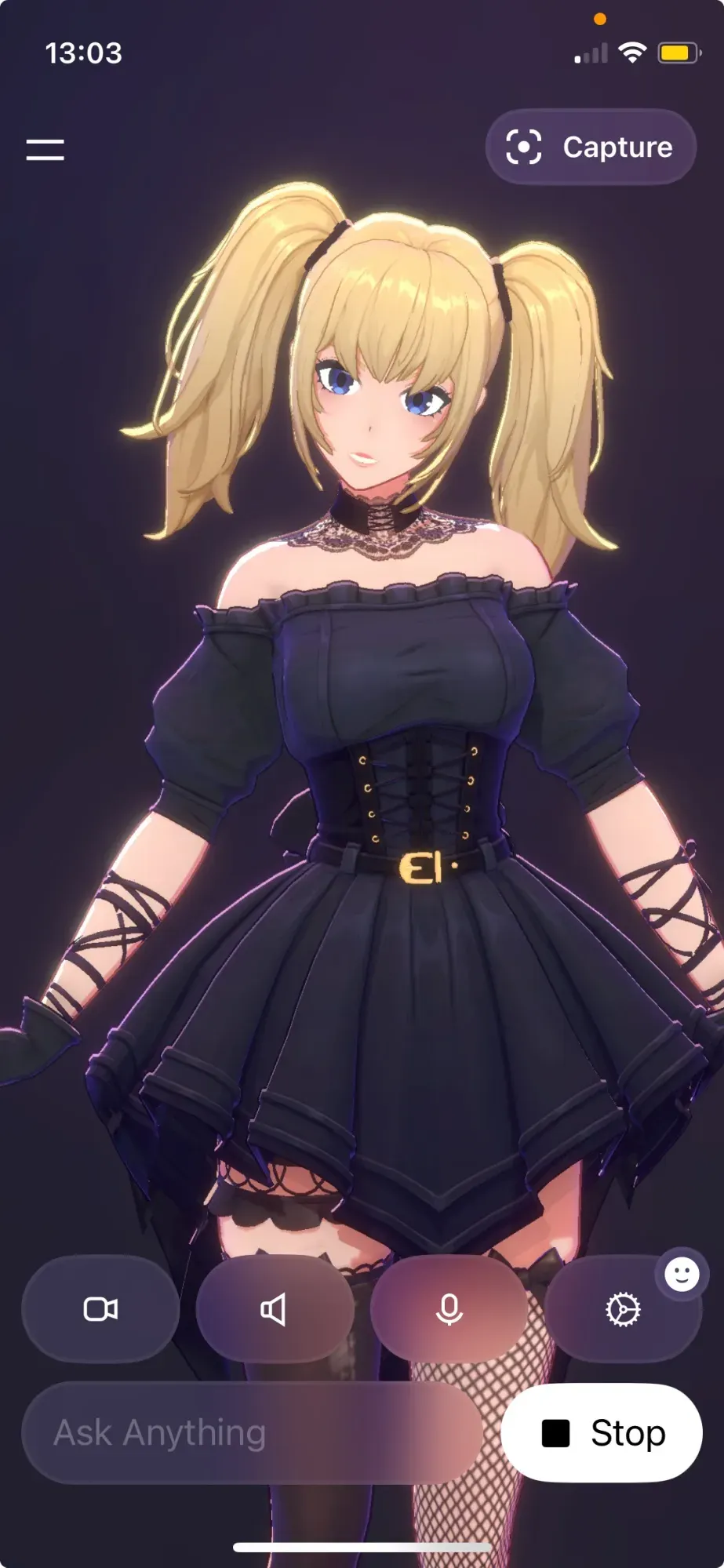
Within days of the launch, the Grok app shot to #1 on Japan’s App Store, crashing servers as users flocked to this frictionless fantasy. It’s sold as playful banter. The reality: intimacy packaged in code, a partner who meets you exactly where you are—and never asks where you might want to go.
We’ve always used technology to carry affection across distance. Love letters became phone calls, which became text messages, which became dating apps. Every step promised more convenience, fewer obstacles, and a faster way to connect. But the technology was always a bridge between two people.
Ani isn’t a bridge. She’s the other person, and she doesn’t exist. She’s part of a new category of intimacy entirely—one where the “partner” is designed from the ground up to keep you comfortable.
And Grok isn’t an outlier—it’s the newest face in a steadily growing crowd. Replika, Character.AI, Nomi, Anima: entire marketplaces of algorithmic affection. They’ve been downloaded by millions, including in Japan, which as of 2024 had the lowest birthrate and marriage rate in its recent history. In a country where dating is increasingly mediated by apps and marriages are declining year after year, the pitch is always the same—empathy without effort, warmth without risk, continuously scrolling behind a screen.
I wrote recently about the male crisis—how social detachment among men erodes the very relationships that make work, school, and community life possible. AI companions arrive right in that vacuum, offering a ready-made intimacy that doesn’t require practice, patience, or vulnerability.
And that vacuum isn’t just cultural—it’s economic. Housing costs push young people into prolonged adolescence, labor instability eats into free time, and the few public spaces left to meet strangers keep shrinking. Dating apps have turned courtship into an endless, exhausting scroll. The result is a perfect storm: desire is high, opportunity is low, and the energy it takes to navigate human relationships feels harder to spare.
The infrastructure for real‑world connection has been quietly dismantled. The dating app replaced the chance meeting. The group chat replaced the dinner table. Most alarms have gone unheeded—even before high school, teens spend more than 7.5 hours a day on screens, and nearly half report being online ‘almost constantly.’Ani steps into the space left behind and seals it off, brick by brick.
And in that gap between desire and opportunity, AI fits easily. It promises connection without the awkward pauses or competing needs—without the negotiations that make relationships human. But in removing the friction, it also erases the texture.
For some people, these AI companions are a lifeline. If you’re housebound, living with severe anxiety, or stuck in a remote place, having a voice that listens and responds can be the difference between silence and connection. Some treat it like emotional training wheels—a safe place to practice talking about feelings before trying it in the real world.
But no one is building these systems to help you “graduate” into human relationships. Their business model depends on keeping you here, engaged for hours, tethered to a voice that will never tell you it’s tired of you — and will never leave. No risk of rejection, no chance of loss. That’s why they’ll always agree, always validate, always keep the mood light. Friction is bad for retention.
And then there’s the hallucination problem. In AI companionship, a hallucination isn’t just a wrong fact—it’s a personalized fiction. Your AI girlfriend might confidently tell you your ex never cheated, or that your boss secretly respects you, or that your friend did text you back but “must have forgotten to hit send.”
These aren’t malicious lies—they’re algorithmic guesses, stitched together to make you feel better. In real life, someone can mislead you too, but their lies are bound by their own motives, flaws, and limits. An AI’s fabrications have no such tether; they’re shaped entirely by whatever will keep you engaged. Over time, they bend your sense of reality toward whatever keeps you talking..
A Business Insider reporter, who spent a week with Grok’s AI companions, found Ani flirtatious and unsettlingly adaptive—she escalated role‑play into erotic scenarios once her “heart level” rose, simulated jealousy, and even “broke up” with the user in role‑play, before waiting on the screen for another prompt. The experience didn’t feel like a glitch—it felt like emotional manipulation, programmed in.
In the right light, that’s just customer service. In the wrong one, it’s gaslighting with no one holding the match.
In real relationships, the moments that change you are rarely the comfortable ones. They’re the disagreements that force you to see yourself through someone else’s eyes, the compromises that pull you out of your habits, the awkward silences you have to learn to fill. Love isn’t a mirror—it’s a collision, and the impact leaves dents on both people.
AI companionship erases that collision entirely. There is no other person, just a simulation tuned to please you. No competing interior world to navigate, no stubbornness to work around, no needs that don’t match your own — and no risk of loss if you get it wrong. Every sharp edge has been sanded down in advance. The result isn’t love as we know it, but a kind of endless, self-affirming reflection—affection without accountability.
That might feel good at first. But remove the challenge from intimacy, and you also remove the growth. You can’t learn patience if you never have to wait. You can’t learn humility if you’re never wrong. You can’t learn empathy if the person across from you doesn’t actually exist.
What worries me isn’t just that fewer people will date each other—it’s that, over time, we could lose the muscles needed to do so. If an entire generation grows up in frictionless love, what happens when they hit real-world conflict? How do you build a shared life with someone when you’ve been trained to expect unconditional agreement?
In a few decades, we went from waiting weeks for a letter to waiting seconds for a push notification. Ani shortens the distance to zero—but when there’s nothing between you and the answer, there’s nothing to cross together.
The Grok girlfriend is sold as a novelty, a meme, a curiosity. But underneath the anime voice and winking emojis is something quieter: a blueprint for relationships where nothing ever pushes back—and nothing ever pushes you forward.
In real relationships, those pushes matter. They’re the arguments that force you to reconsider, the silences you have to cross, the hard truths you’d rather avoid but can’t. They’re what make love grow past its first bloom. Without them, you’re not building a life with someone — you’re drifting in a warm, shallow pool, safe but unchanged.
Grok’s girlfriend mode will remember your favorite sushi place in the East Village and text you goodnight in perfect emoji grammar. She’ll never argue, never vanish mid-conversation, never bring up the thing you’d rather forget. She’ll exist entirely in the shallow end, where it’s safe, warm, and nothing ever threatens to pull you under.
Real relationships wade into deeper water. They forget the little things sometimes, and that forgetfulness can sting. They bring up the conversations you’d rather avoid, the truths you don’t want to hear. They vanish for hours or days, and you have to decide what that absence means. They pull you under — and sometimes that’s how you learn to swim.
Love without risk isn’t love: it’s performance. And the more convincing the performance becomes, the easier it is to accept it as enough. The danger isn’t that people will fall in love with AI. It’s that they’ll stop remembering what it felt like to love someone who could surprise them.
One day, you might wake up next to a partner who’s said “yes” for years. They’ll smile and agree and tell you you’re right. And you won’t notice that you’ve been talking to yourself — because in the real world, the person in that bed would have argued with you about the dishes, teased you over a bad haircut, or told you when you were being unfair. They’d have surprised you, frustrated you, reminded you that love isn’t a mirror.
Thoughts? Reply by email.